AI is a muscle
Using AI is a muscle.
And like any muscle, it takes time to build.
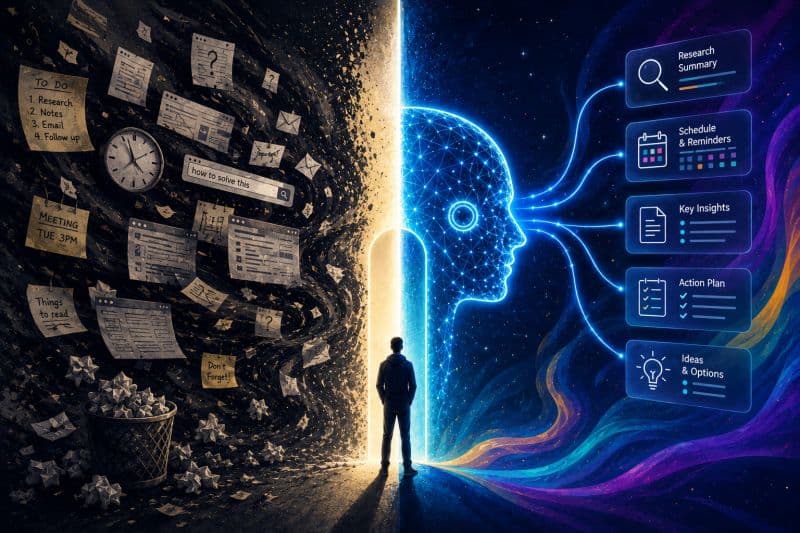
Even though AI tools are everywhere now, I still catch myself approaching problems the old way: opening too many tabs, taking manual notes, setting up calendar reminders, searching through articles, scrolling until I feel like I have "enough" information.
A lot of us are still wired to hunt for information.
That used to be the skill: knowing what to search, where to look, how to piece things together, and how to keep track of it all manually.
But we're in a strange and exciting new phase now.
Many of us effectively have access to personal assistants that can help summarize, organize, plan, brainstorm, research, draft, compare, and simplify. Not perfectly. Not magically. But often well enough to remove a lot of the friction from our work.
The challenge is that using AI well requires a shift in mindset.
Instead of asking, "How do I solve this manually?"
I'm trying to ask, "What parts of this can I delegate?"
That might mean asking AI to turn messy thoughts into notes, build a first draft, compare options, create a checklist, summarize a long article, or help me structure my next steps.
I'm still training myself to think beyond my own manual habits.
Not because I want AI to do all the thinking for me, but because I want to reserve more of my energy for the work that actually needs my full attention.
That's the real skill I'm learning: partitioning my time and mental energy better.
AI is not just a tool you use. It's a habit you build.
And for many of us, the biggest unlock is not learning every feature.
It's remembering to ask.